
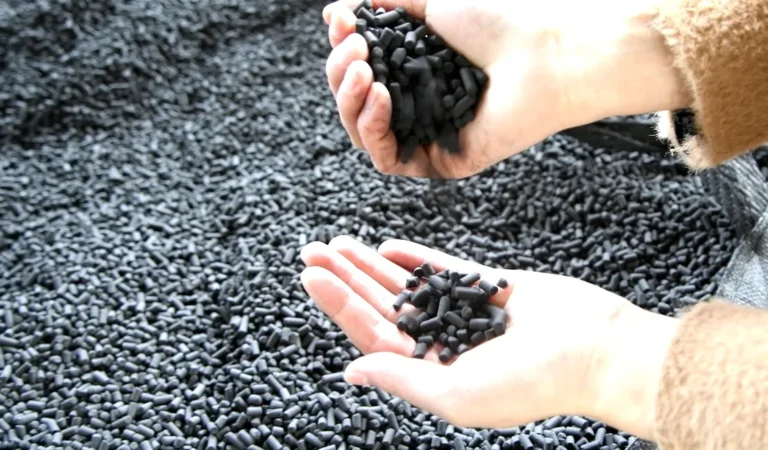
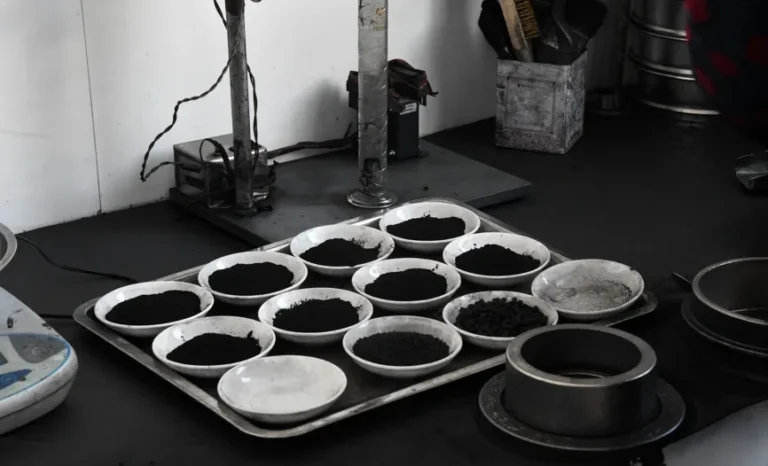
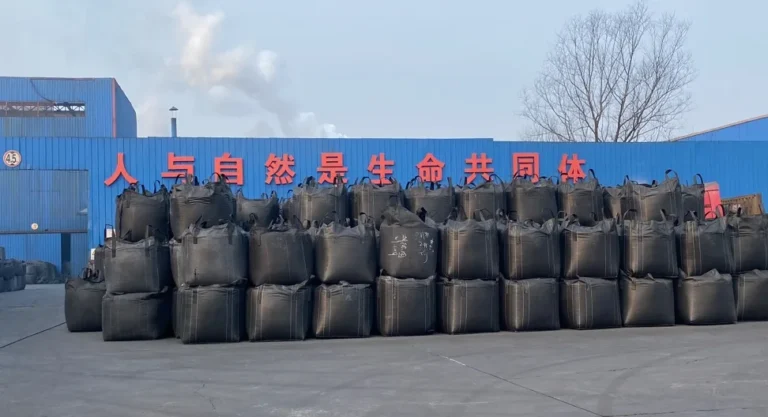
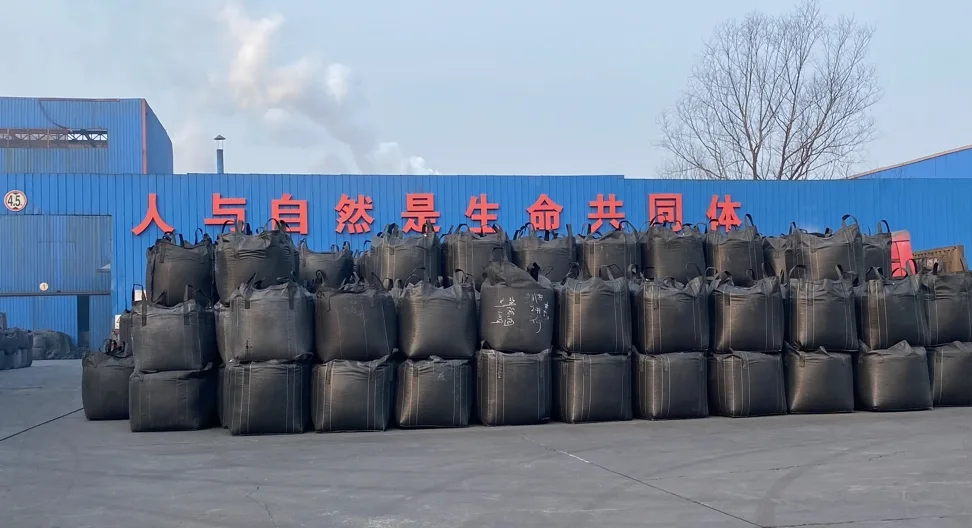
Qizhong has completed a second consecutive annual supply for a European biogas engineering company: 8 tons of KI-impregnated columnar (extruded) activated carbon, packed in 25 kg bags and shipped to France. The carbon is used for hydrogen sulfide (H2S) removal in the customer’s biogas purification units. In the customer’s original inquiry, the biogas stream carried H2S concentrations of up to 970 ppm and SO2 of up to 4,000 ppm — a demanding desulfurization duty. After the first supply performed as expected, the customer returned this year for repeat volume.
The Customer Requirement
The customer is a biogas product engineer working on biogas upgrading units, and first approached Qizhong looking for activated carbon able to handle a high H2S load. Their inquiry described biogas containing up to 970 ppm H2S together with SO2 of up to 4,000 ppm.
Loads at this level are exactly why desulfurization sits at the front of every serious biogas purification train. Raw biogas leaves the digester saturated with moisture and carrying H2S produced by anaerobic digestion — typically from tens of ppm to several thousand ppm depending on the substrate. Combined with water vapor, H2S forms corrosive acids that attack pipework, compressors, and storage tanks. If the gas is burned in a CHP unit, H2S converts to SO2 and drives acid formation in the engine and exhaust train; if the gas is upgraded to biomethane, sulfur compounds poison upgrading catalysts and membranes, and grid injection standards only accept gas with H2S reduced to very low levels.
The customer therefore needed a media that could reliably bring a high-sulfur gas down to safe levels — and, just as important for an engineering company delivering projects, a supplier that could repeat that supply year after year.
Why KI-Impregnated Activated Carbon for H2S Removal
What KI impregnated carbon is
KI-impregnated activated carbon starts with a high-quality extruded activated carbon base — in this case a columnar coal-based carbon with a well-developed pore system (CTC ≥55%, iodine number ≥900 mg/g, hardness ≥95%). The base carbon is impregnated with a controlled amount of potassium iodide (KI), typically 5–10% by weight, and dried so the salt is evenly distributed across the pore surfaces.
The removal mechanism
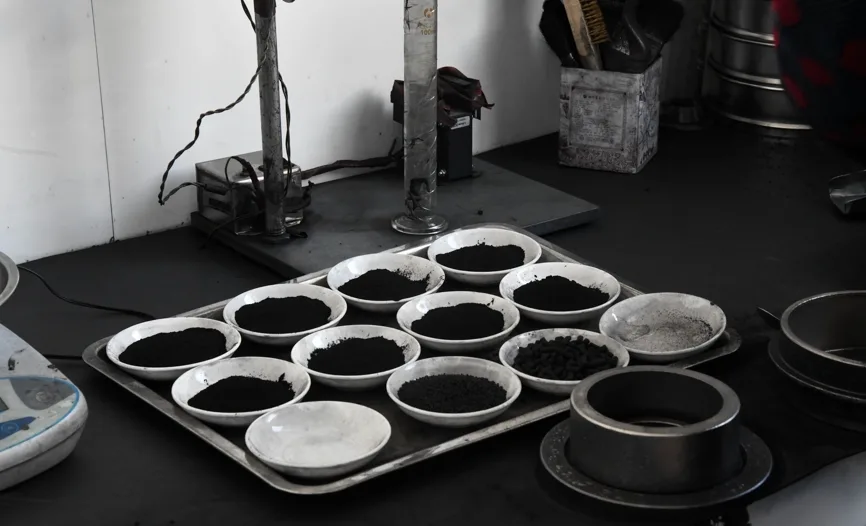
The potassium iodide does not neutralize the H2S — it promotes its catalytic conversion. In the presence of the small oxygen fraction that is naturally present in, or deliberately dosed into, biogas, the impregnated surface enables H2S to oxidize at ambient temperature:
H2S + ½ O2 → S (elemental sulfur) + H2O
The reaction deposits elemental sulfur inside the carbon’s pore system. The carbon bed therefore removes H2S by converting it and storing it: the media keeps working until its accessible pore volume fills with sulfur, which is why properly impregnated grades reach H2S breakthrough capacities in the range of roughly 0.10–0.15 g per cm³ of carbon — several times higher than unimpregnated carbon of the same base.
Because the main route is catalytic, the salt itself is not the primary consumable; capacity is limited by pore blockage rather than reagent exhaustion. This is a key difference from caustic-impregnated carbons (KOH or NaOH), which remove acid gases by chemical neutralization of the impregnant itself. Caustic grades bring their own considerations — heat release on wetting, vessel corrosion risk, and spent-media handling — whereas KI grades operate at ambient temperature with no alkaline load on the vessel. For a continuously running biogas plant, the catalytic route also tolerates moderate moisture in the gas, which biogas always carries to some degree.
Why the columnar (extruded) form
- Uniform bed packing. Consistent 4 mm pellets load evenly and settle predictably, avoiding channels that let gas bypass the media.
- Stable pressure drop. The regular shape and open packing between pellets keep the pressure differential across the bed moderate — important for continuously operated gas systems sized with specific blower or compressor margins.
- Mechanical strength. A hardness of ≥95% limits dust generation during loading and service; dust in a gas system ends up in compressors and instruments.
- Predictable replacement. Pellets discharge cleanly at change-out, which keeps vessel turnaround time short.
Product and Order Specifications
Note: the values below are the general specifications of this grade.
| Item | Details |
|---|---|
| Application | H2S removal in biogas purification |
| Product | KI-impregnated columnar activated carbon |
| Base material | Coal |
| Form / diameter | 4 mm extruded pellet |
| KI impregnation | 5–10% w/w |
| CTC value | ≥55% |
| Iodine number | ≥900 mg/g |
| Hardness | ≥95% |
| Ash content | ≤10% |
| Moisture | ≤5% |
| Bulk density | 400–550 g/L |
| H2S breakthrough capacity (typical) | ~0.10–0.15 g/cm³ |
| Quantity | 8 tons |
| Packaging | 25 kg bags |
| Destination | France |
How the Carbon Works in a Biogas Purification Train
In a typical biogas upgrading setup, the activated carbon desulfurization stage sits after gas dewatering and upstream of the equipment it protects — compressors, upgrading units such as membrane or water-wash systems, CHP engines, or the grid injection point. Gas flows through one or more fixed-bed vessels filled with the carbon; as the gas passes the bed, H2S is converted and retained while the cleaned gas continues downstream.
Operating practice for this media is straightforward:
- Oxygen support. The catalytic oxidation needs a small oxygen presence — biogas plants commonly ensure roughly 1–2% O2 in the gas to keep the conversion running efficiently.
- Monitoring. Outlet H2S is tracked with an online analyzer or gas detection tubes, and the bed is scheduled for change-out when the outlet approaches the site’s limit rather than waiting for a full breakthrough.
- Change-out planning. Media life depends on the actual H2S load, gas flow, moisture, and temperature, so beds are sized with the site’s real gas analysis rather than generic assumptions.
- Handling. The 25 kg bag format the customer specified suits plants without bulk-handling equipment: bags can be carried and poured directly into the vessel by hand, which simplifies loading in confined plant layouts and allows partial refills.
Result and Repeat Order
The carbon supplied in the first order was put into service in the customer’s biogas purification units, and the customer reported that it performed well and achieved the effect they expected.
On that basis, the customer placed a second order this year: 8 tons of the same KI-impregnated columnar carbon, again packed in 25 kg bags, shipped to France. For a biogas engineering company, this is the commercially meaningful part of the case — desulfurization media is a recurring consumable, not a one-time purchase. Sourcing the same grade from the same manufacturer at every change-out keeps bed behavior predictable: the same capacity, the same pressure drop, the same change-out rhythm on every vessel.
What This Case Means for Similar Buyers
This case is relevant if you are:
- A biogas engineering company specifying desulfurization media for upgrading projects, particularly with high-sulfur substrates.
- A biogas plant operator replacing H2S removal media on a maintenance schedule and looking for consistent repeat supply.
- A procurement or sourcing team comparing impregnated carbon grades and needing clear specifications, COA documentation, and export packaging.
What Similar Biogas Operators Should Confirm Before Ordering
To size the media correctly, prepare this information:
- the H2S concentration and gas flow rate the vessels must handle;
- oxygen content in the gas (or whether O2 can be dosed);
- vessel dimensions and the pellet diameter the bed design allows;
- the required outlet H2S limit and monitoring method;
- packaging preference and destination port;
- whether batch COA documentation is required before shipment.
Frequently Asked Questions
How does KI-impregnated activated carbon remove H2S?
The potassium iodide impregnation promotes the low-temperature catalytic oxidation of H2S into elemental sulfur and water in the presence of oxygen. The sulfur is retained inside the carbon’s pores, and the bed keeps working until the accessible pore volume is filled with sulfur.
Does the biogas need oxygen for this media to work?
Yes, a small amount. The catalytic conversion consumes oxygen, so the gas needs a modest O2 presence — plants commonly maintain roughly 1–2% — for the media to reach its full capacity.
How is KI-impregnated carbon different from KOH or NaOH impregnated carbon?
KI works as a catalytic promoter: H2S is converted to sulfur, which is stored in the pores, and the salt is not primarily consumed. KOH/NaOH grades remove acid gases by neutralizing them with the impregnant itself, which is consumed in the process and brings heat-release and corrosion considerations. The right choice depends on the gas composition, oxygen availability, and the plant’s handling preferences.
Why choose 4 mm pellets instead of granular carbon for biogas beds?
Extruded pellets pack uniformly, keep pressure drop moderate and stable, generate less dust, and discharge cleanly at change-out. Granular carbon can offer faster kinetics in very small beds, but for continuously operated purification vessels the pellet form is the standard choice.
Can Qizhong supply samples and COA before a bulk order?
Yes. Samples with corresponding specification documentation can be arranged, so the media can be checked against your vessel design and gas analysis before a commercial quantity is confirmed.
Related Pages
- Impregnated Activated Carbon — the product family this order belongs to
- Biogas Purification Applications — how activated carbon is used in biogas upgrading
- 56 Tons of 4 mm Activated Carbon for Biogas Purification in Poland — a related biogas supply case
Need KI-Impregnated Activated Carbon for Biogas H2S Removal?
Send us your application and gas conditions — H2S concentration, gas flow, oxygen content, required pellet diameter, quantity, packaging, and destination port — and we will recommend a suitable grade, provide a sample with COA, and quote your order. You can also reach the Qizhong team through our contact page for samples, COA, and quotations.