
🚀 Key Takeaways for Procurement Pros
- Superior Flow Dynamics: Pellet activated carbon offers lower pressure drop than granular alternatives, resulting in reduced energy costs for gas purification systems.
- Extended Service Life: High-quality pellet carbon from Ningxia Taixi coal sources delivers greater mechanical strength and longer service intervals.
- Application Versatility: Impregnation options (KI/KOH/CuO/phosphoric acid) expand functionality for specialized contaminant removal without system redesign.
Industrial contamination challenges demand effective, efficient filtration solutions. The cost of inadequate purification systems affects both compliance and operational efficiency, creating bottlenecks in production processes.
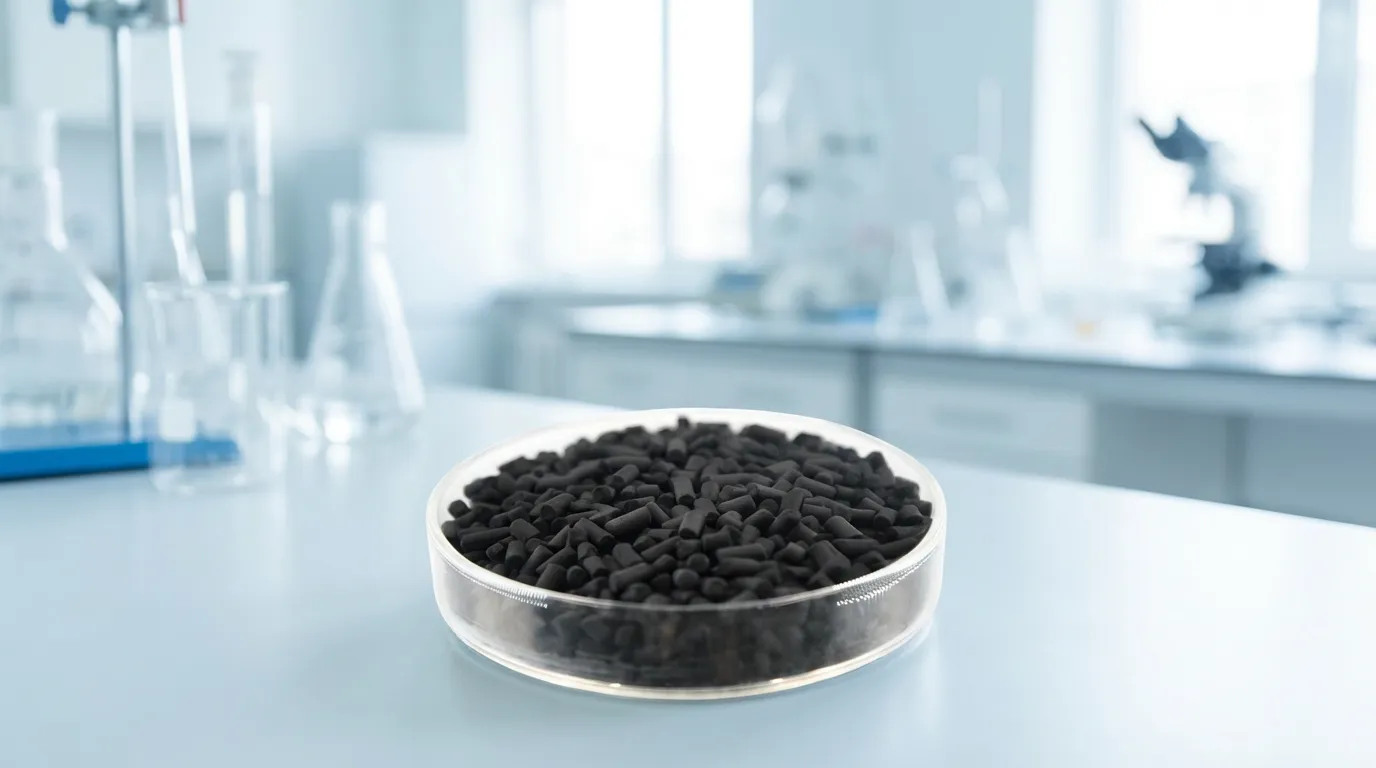
Pellet activated carbon is a cylindrical-shaped, highly porous adsorbent material specifically engineered for gas purification, water treatment, and specialized industrial filtration applications requiring low pressure drop and high durability.
This article examines the properties, applications, and selection criteria for pellet activated carbon to help you make informed procurement decisions.
Introduction to Pellet Activated Carbon
Modern industrial processes generate contaminants that threaten both production quality and environmental compliance. Standard filtration approaches often fail to address the full spectrum of pollutants.
Pellet activated carbon offers a versatile solution across multiple industries, combining high adsorption capacity with excellent flow characteristics. Its engineered cylindrical shape enables efficient contaminant removal in both gas and liquid applications, providing consistent performance where traditional carbon forms struggle.
From air purification to specialized gas treatment, pellet carbon stands out as the preferred choice for applications requiring both durability and low resistance to flow – a critical consideration for maintaining operational efficiency while meeting strict regulatory requirements.
What is Pellet Activated Carbon?
Confusion about carbon filtration forms creates costly specification errors. Wrong selections lead to premature system failure and unplanned downtime.
Pellet activated carbon (also called columnar or extruded activated carbon) is a cylindrical-shaped adsorbent material manufactured by extruding powdered carbon with binders, followed by carbonization and activation processes to create a highly porous structure.

Unlike granular or powdered activated carbon, pellet carbon features:
- Uniform cylindrical shape: Typically 0.8-5mm in diameter (common sizes: 0.9mm, 1.5mm, 3mm, 4mm)
- Controlled porosity: Balanced distribution of micro, meso, and macropores
- High surface area: 800-1200 m²/g for maximum adsorption capacity
- Superior hardness: Minimal dust generation during handling
- Excellent flow dynamics: Lower pressure drop in fixed-bed applications
The manufacturing process involves several critical steps:
- Raw material selection and grinding (coal, coconut shell, or wood)
- Mixing with binders like coal tar pitch and water
- Extrusion through precision dies under high pressure
- Carbonization in oxygen-limited environment (400-500°C)
- Activation with steam or chemical agents (800-1000°C)
This specialized production technique creates a robust adsorbent with consistent physical characteristics and predictable performance in demanding industrial applications.
Applications of Pellet Activated Carbon
Finding the right filtration solution for specific contaminants creates procurement challenges. Matching carbon types to applications requires technical understanding.
Pellet activated carbon serves as the preferred adsorbent in numerous industrial applications where its physical structure offers significant advantages. Its versatility extends across multiple sectors:
- Gas Purification
- VOC removal from industrial exhaust streams
- Mercury capture from natural gas and coal-fired plants
- Hydrogen sulfide (H₂S) elimination from biogas
- Solvent vapor recovery systems
- Pressure swing adsorption (PSA) processes
- Respiratory protection in gas masks and filters
- Water Treatment
- Fixed-bed adsorbers for groundwater remediation
- Industrial wastewater purification
- Drinking water dechlorination
- Specialized Industrial Uses
- Catalyst support in chemical production
- Gold recovery processes
- Radioactive iodine capture in nuclear facilities
Pellet activated carbon can be impregnated with various chemicals to enhance performance for specific applications. These impregnations significantly expand functionality:
- Potassium Iodide (KI): Enhanced mercury removal
- Potassium Hydroxide (KOH): Acid gas capture
- Copper Oxide (CuO): Hydrogen sulfide removal
- Phosphoric Acid: Ammonia and amine control
This impregnation versatility allows for customized solutions targeting specific contaminants without requiring complete system redesigns, offering procurement managers significant flexibility in addressing evolving treatment challenges.
Advantages of Using Pellet Activated Carbon
Filtration system inefficiencies drive up operational costs. Pressure drop across carbon beds creates energy waste and reduces treatment capacity.
| Feature | Pellet Activated Carbon | Granular (GAC) | Powdered (PAC) |
|---|---|---|---|
| Shape/Handling | Cylindrical, easy to stack/fix, minimal dust | Irregular granules, moderate dust | Fine powder, significant dust |
| Pressure Drop | Low (ideal for gas flow) | Moderate | High (not suitable for gas) |
| Strength/Durability | High mechanical strength | Good | Low |
| Regeneration | Multiple thermal reactivation cycles | Possible but with losses | Difficult/impractical |
| Best Applications | Gas phase, critical flow systems | Mixed liquid/gas applications | Batch liquid treatment |
The unique advantages of pellet activated carbon include:
- Minimal Pressure Drop: The uniform cylindrical shape creates consistent void spaces between particles, reducing resistance to flow by up to 40% compared to granular carbon. This translates to lower energy costs in operation.
- Superior Mechanical Integrity: High hardness ratings (>95%) minimize breakdown during transport, loading, and operation, preventing channeling and ensuring consistent performance throughout the service life.
- Exceptional Adsorption Capacity: Surface areas of 800-1200 m²/g provide extensive contaminant capture capability, extending run times between replacements.
- Reduced Dust Generation: The manufacturing process creates a cohesive structure that resists attrition, minimizing downstream filtration requirements and product loss.
- Regeneration Potential: Thermal reactivation at 800-850°C can restore 70-90% of original capacity through multiple cycles, significantly reducing lifetime operational costs and environmental impact.
These performance advantages make pellet activated carbon the preferred choice for gas purification systems where operational efficiency and consistent treatment quality are critical requirements.
How to Select the Right Pellet Activated Carbon
Incorrect carbon selection leads to premature breakthrough and system failures. Material properties must match specific contaminant profiles and operational parameters.

Selecting the optimal pellet activated carbon requires evaluation of several critical parameters:
- Iodine Number (mg/g): Indicates micropore volume and adsorption capacity for small molecules. Target 800-1200 mg/g for most applications.
- Hardness (%): Measures resistance to attrition during handling and use. Look for >90% for typical applications, >95% for critical systems.
- Ash Content (%): Lower values (<10%) indicate higher carbon purity and fewer potential interferences. Critical for sensitive applications.
- Apparent Density (g/cc): Typically 0.45-0.55 g/cm³, affects bed packing and contaminant holding capacity.
- CTC Value (%): Carbon tetrachloride adsorption indicates mesopore development. Values of 50-100% are common, with higher values for VOC applications.
- Moisture Content (%): Should be <5% to maximize adsorption potential.
- Particle Size Distribution: Uniform sizing ensures predictable pressure drop characteristics.
Raw material selection significantly impacts performance. High-quality pellet carbon produced from Ningxia Taixi coal offers exceptional hardness and durability characteristics that directly translate to longer service life in industrial applications. This premium coal source creates a final product with superior mechanical strength and consistent adsorption properties.
When choosing between pellet and other carbon forms:
- Select pellet carbon for gas phase applications requiring low pressure drop
- Choose pellet carbon when dust generation must be minimized
- Opt for pellet form in applications requiring thermal regeneration
- Prefer granular carbon for liquid applications with high suspended solids
Working with technical experts to match carbon specifications with your specific contaminant profile and operational parameters ensures optimal system performance and cost-effectiveness.
Quality Considerations for Pellet Activated Carbon
Substandard activated carbon creates hidden costs. Poor quality materials lead to frequent replacements, inconsistent performance, and potential system damage.
Ensuring reliable performance requires attention to quality factors throughout the procurement process. Consistent manufacturing processes are essential to producing pellet activated carbon that meets stringent performance requirements.
- Industry Standards and Testing Methods
- ASTM D2866: Standard Test Method for Total Ash Content
- ASTM D4607: Standard Test Method for Determination of Iodine Number
- ASTM D3802: Standard Test Method for Ball-Pan Hardness
- ASTM D2854: Standard Test Method for Apparent Density
- ISO 9277: Determination of BET Specific Surface Area
- Key Performance Indicators
- Adsorption capacity under standardized conditions
- Breakthrough curves for target contaminants
- Pressure drop characteristics at specified flow rates
- Hardness and attrition resistance during handling
- Uniformity of size distribution within specification
- Manufacturing Quality Control
- Raw material testing and verification
- Process parameter monitoring and control
- In-process sampling and testing
- Finished product batch testing
- Lot traceability and documentation
When selecting a manufacturer, evaluate their quality management systems, technical capabilities, and consistency of production. Professional manufacturers implement multi-stage quality assurance protocols that include raw material verification, process monitoring, and comprehensive finished product testing.
Request test certificates that document key performance parameters and verify compliance with both industry standards and your specific requirements. Experienced manufacturers should provide detailed technical datasheets and supporting documentation for each production lot.
Periodic third-party verification testing can provide additional confidence in ongoing product quality, particularly for critical applications where performance directly impacts regulatory compliance or process efficiency.
Frequently Asked Questions about Pellet Activated Carbon
Can pellet activated carbon be regenerated?
Yes, pellet activated carbon can be thermally regenerated 3-5+ times at 800-850°C, restoring 70-90% of original capacity. This regeneration capability significantly reduces lifetime operational costs compared to single-use alternatives.
What is the typical lifespan of pellet activated carbon?
Lifespan varies with contaminant load and operating conditions, typically ranging from 6-36 months. Regular performance monitoring through pressure drop measurements and outlet sampling helps determine optimal replacement timing.
How does pellet carbon compare to granular activated carbon?
Pellet carbon offers lower pressure drop (30-40% less), higher mechanical strength, and more uniform flow characteristics than granular carbon, making it superior for gas-phase applications. Granular carbon typically provides more cost-effective treatment for liquids.
What impregnations are available for specialized applications?
Common impregnations include KI (mercury removal), KOH (acid gas capture), CuO (H₂S removal), and phosphoric acid (ammonia control). These chemical enhancements target specific contaminants with greater efficiency than standard carbon.
Is pellet carbon environmentally friendly?
When properly managed with regeneration cycles, pellet carbon offers excellent environmental sustainability. Its durability minimizes waste generation, while thermal reactivation reduces raw material consumption by extending useful life.
Conclusion: The Future of Pellet Activated Carbon
Pellet activated carbon continues to evolve as a critical component in modern industrial filtration and purification processes. Its unique combination of low pressure drop, high mechanical strength, and versatile adsorption capabilities makes it indispensable for applications ranging from air purification to specialized gas treatment. The ability to customize performance through chemical impregnation further expands its utility across diverse industries.
As environmental regulations become increasingly stringent, the importance of effective contaminant removal solutions will only grow. High-quality pellet activated carbon, particularly those produced from premium raw materials like Ningxia Taixi coal, offers a reliable, cost-effective approach to meeting these challenges while maximizing operational efficiency.
Contact Qizhong Chemical today for a free sample or technical consultation on how our premium pellet activated carbon can optimize your purification processes.